

For partners

One certificate. Value for every institution.

RISIQ certifies EV batteries on behalf of the institutions that carry the risk — the lenders financing the cars, the insurers covering them, and the agencies responsible for what is imported and what stays on the road.

For Buyers & sellers

Buying or selling a used BYD? Ask for the certificate.

50%of a used EV’s value is the battery

A used Atto 3 or Dolphin is priced on mileage and paintwork — the battery, half the car’s value, stays invisible. A RISIQ certificate makes it visible: one scan shows the buyer the measured, calibrated health, and the seller gets a faster sale at a fair price.

  • Scan the QR code on any listing to confirm it is genuine
  • The same A–D grade a bank or insurer reads
  • Certified cars sell faster, with fewer disputes after the handshake
Discuss this with us
For Insurers

Price the risk you already carry.

A–Done grade per policy

You underwrite the cars you insure without ever seeing the battery inside them — the single most expensive part to replace. Today there is no way to price that risk at policy issue or at claim, so policies become guesses, and mispriced risk and fraud slip straight through.

  • Independent, dated state-of-health record at underwriting
  • Settle battery-related claims against a signed measurement
  • Tier premiums by grade A–D, not by odometer
  • Launch new EV insurance and battery-warranty products, and cut claims disputes and battery-related fraud
Discuss this with us
For Banks & MFIs

Lend against collateral you can actually model.

35%of car value sits in the pack

On a five-year EV loan the battery is roughly a third of what the car is worth — and the only part whose value nobody checks. RISIQ gives your credit committee a battery-adjusted residual at origination and at every re-test.

  • Battery-adjusted residual value at origination
  • Scheduled re-tests at 12 and 24 months on the same car
  • Repossession valuations that hold up in a dispute
Discuss this with us
For Importers & dealers

Prove the pack before it reaches the showroom.

Any EVno OEM unlock needed

BYD, Changan, Jetour — the cars arriving in Ethiopia are locked to their manufacturers’ tools. RISIQ measures at the charging socket, so every import can be certified on arrival, no OEM unlock required.

  • Works on locked Chinese imports without OEM software
  • Certificate on arrival, after the heat of the Djibouti–Afar corridor
  • Price and warrant each car by measured grade
Discuss this with us
For Government agencies

An independent standard for a national fleet.

< 2 spublic verification

Ethiopia has moved faster on EVs than any country in Africa. A trusted, public battery-health record lets the resale market, lenders and insurers grow with it — without waiting on manufacturers.

  • Ministry of Trade: import screening on new arrivals
  • Ministry of Transport: annual roadworthiness checks
  • One method, one grade scale across every brand
  • Public registry — anyone can verify a certificate in seconds, on the road to 500,000 EVs
Discuss this with us

Why it changes things. A signed, independently measured and calibrated state-of-health figure — not a raw self-reported BMS number — gives your team a real variable to work with, on the exact locked, imported EVs already on Ethiopian roads.

The model

Simple to adopt — no capex, no training burden.

  1. 01

    We deploy & maintain

    RISIQ installs and services the certification rig at your site. Nothing to buy, no manufacturer tools to license.

  2. 02

    You certify on demand

    Your existing team runs a test in minutes and issues a certificate — no battery specialists needed.

  3. 03

    Pay as you certify

    A modest per-certificate fee plus a simple rig subscription — billed locally, in birr, via Telebirr.

The rig pays for itself quickly. From there the certificate is almost pure trust — and pure margin — shared with the partners who move first.

The landscape

Built for the market Ethiopia actually has.

Battery diagnostics is a proven category in Europe. None of it is built for the market Ethiopia actually has: locked Chinese imports, intermittent connectivity, and institutions that need a certificate rather than a dashboard.

CapabilityRISIQ socket measurementOBD / BMS certifiers (AVILOO, TWAICE class)Fleet analytics (telematics platforms)
Measurement sourceOwn meter at the charging socket; BMS reading cross-checked against a calibrated databaseThe vehicle’s own battery computer, read over OBDOEM / telematics data feeds from the vehicle
Works on locked Chinese importsWorks — no OEM access neededFrequently blocked by encrypted BMS protocolsRequires manufacturer data cooperation
Independent of the car’s self-reportFully — the BMS figure is calibrated against what we measure, never used rawDepends on BMS honesty and per-model decodingBuilt on vehicle-reported telemetry
Presence in East AfricaAddis Ababa — built for this marketNoneNone
Works with unreliable connectivityOffline store-and-forward by designVaries by toolCloud-dependent
Primary outputSigned, QR-verifiable certificate for banks & insurersBattery certificate for the European used-car marketFleet monitoring dashboards & analytics
Billing & currencyLocally in birr, via TelebirrEUR / USD, European channelsEnterprise SaaS contracts

Category comparison from public product documentation, 2026. Columns describe typical architectures, not any single product.

Technology partnership

European energy engineering, applied in Addis.

RISIQ builds its measurement hardware and certification platform in technology partnership with Eniris — a leading European energy-management-system provider whose SmartgridOne platform manages more than 150,000 installations through 500+ vendor-independent hardware integrations.

Reading true delivered energy from equipment nobody controls is exactly the problem Eniris has spent its life solving. RISIQ points it at a new asset class: the locked, imported battery.

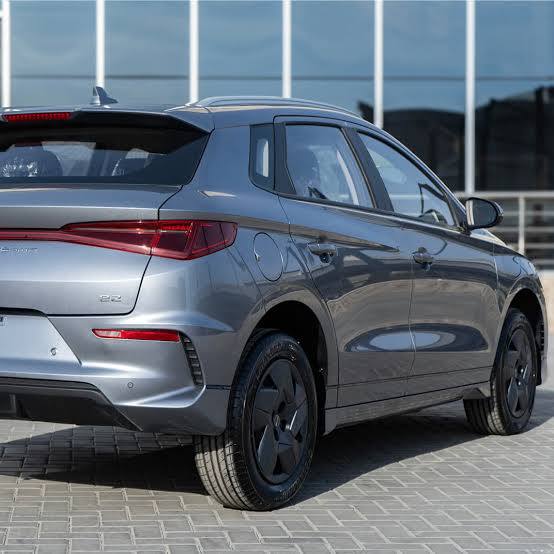
A grey electric SUV seen from the rear, parked on paving outside a glass building
The proposal

Let's run a 90-day certification pilot in Addis.

Ten BYD vehicles, from late October 2026. Founding places are open to banks, microfinance institutions and insurers, at no cost.